
5 martie 2026
Rebuilding the Existing Housing Stock: Why the Future of Construction Is Not New Homes
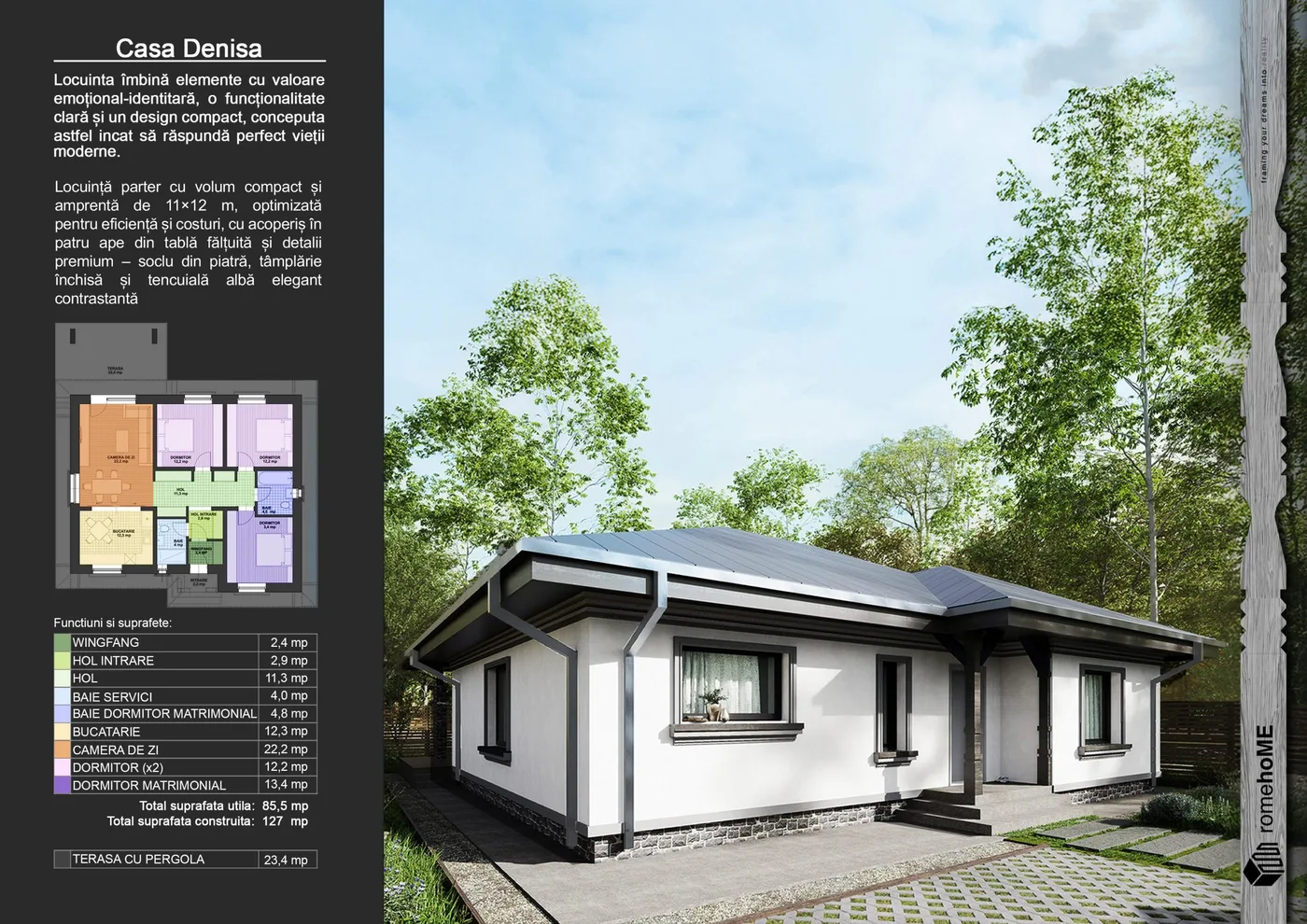
In Romania’s real estate ecosystem, an interesting paradox appears — almost ironic when viewed through the lens of engineering. The country has one of the highest homeownership rates in Europe, yet it also has one of the oldest housing stocks.
In other words, most people own their homes, but many of those homes were designed for a completely different era.
Large portions of the housing stock were built decades ago, often under conditions where energy efficiency standards were minimal or non-existent. Heating systems were inefficient, building envelopes poorly insulated, and ventilation systems rarely considered in the design.
Today, the expectations for housing are very different. Modern homes must provide energy efficiency, indoor comfort, healthy air quality, and adaptability to new technologies.
Because of this, the strategic question for the construction industry is no longer:
“How many new homes should we build?”
Instead, the real question becomes:
“How do we intelligently rebuild and transform the homes that already exist?”
This shift opens a significant opportunity for industrialized construction solutions, such as those developed by RomeHome.
The Existing Housing Stock: The Largest Market of the Next Decades
Romania has millions of residential units built between 1960 and 1990. These include apartment blocks, individual houses, and homes constructed privately without modern structural planning.
Many of these buildings share similar characteristics:
• high energy consumption
• outdated layouts and room configurations
• lack of mechanical ventilation systems
• improvised electrical and plumbing installations
• extensions added over time without structural planning
In many cases, the buildings are still structurally viable but no longer meet modern living standards.
Demolishing and rebuilding everything from scratch is not always realistic, either economically or environmentally.
Instead, a more sustainable and logical solution is the intelligent reconstruction of existing homes.
From Renovation to Full Reconstruction
The real estate market often uses the word “renovation.”
In practice, however, many homes require much more than basic renovation.
Replacing windows or adding insulation rarely solves deeper problems related to:
• structural performance
• outdated floor plans
• inefficient mechanical systems
• poor energy performance
The modern approach is complete building reconfiguration.
This can include:
✔ vertical extensions (adding additional floors)
✔ lateral extensions to increase living space
✔ rebuilding the thermal envelope
✔ replacing mechanical and electrical systems
✔ integrating smart home technologies
✔ improving overall energy efficiency
At this point, the project moves beyond renovation and becomes a reconstruction of the existing home.
Why Lightweight Structures Become the Logical Solution
When extending or reconstructing an existing building, one factor becomes critical: structural weight.
Many older buildings were not designed to support heavy additional loads such as concrete or masonry extensions.
This is where Light Steel Frame (LSF) structures offer a major advantage.
Lightweight steel systems make it possible to expand or upgrade existing buildings while maintaining structural safety.
Key benefits include:
• extremely low structural weight
• fast and precise installation
• integration of mechanical systems within the structure
• better control of thermal bridges
• compatibility with prefabrication and industrial production
Instead of improvisation on site, the building can be reconfigured like a modular system.
This approach significantly reduces structural risk and construction complexity.
Industrialization in Construction
The automotive industry experienced a revolution when production moved from workshops into factories.
Construction is now beginning to follow a similar path.
Industrialized building systems rely on digital design, factory production, and precise assembly on site.
RomeHome is developing exactly this approach: structural components that are digitally engineered and manufactured with industrial precision.
The process typically follows a clear workflow:
1️⃣ complete digital structural modeling
2️⃣ CNC manufacturing of steel components
3️⃣ delivery to the construction site as an assembly kit
4️⃣ fast installation with minimal on-site modification
This method drastically reduces construction uncertainties.
The building process becomes less dependent on improvisation and more similar to assembling a technical system.
The Real Market Opportunity
From a macroeconomic perspective, Romania faces two simultaneous realities:
• millions of homes that require modernization
• rising costs for new construction projects
Together, these factors create a massive market opportunity for reconstruction and expansion of existing buildings.
Examples include:
• attic extensions on apartment blocks
• additional floors added to existing houses
• complete energy retrofits
• conversion of outdated homes into energy-efficient dwellings
These transformations can only be performed efficiently when industrialized construction methods are used.
The Future of Housing Is Transformation
Over the next two decades, the largest segment of the European construction market will likely not be new buildings.
Instead, it will be the transformation of existing housing stock.
Cities are already built. Infrastructure already exists. The challenge now is improving what is already there.
The future of construction will focus on:
• efficiency
• adaptability
• energy performance
• industrial precision
For companies like RomeHome, this represents a clear direction: homes designed, produced, and assembled as intelligent building systems.
Because the future of construction is not just about building more square meters.
It is about transforming the spaces we already have into modern, efficient, and sustainable homes.
🔗 Poate te interesează și:
Dacă vrei să aprofundezi subiectul construcțiilor reale, îți recomandăm și următoarele articole RomeHome:
Varianta orientată pe sustenabilitate
Energie regenerabilă și eficiență energetică
O locuință eficientă energetic are nevoie de soluții corecte încă din faza de proiectare. Pentru echipamente fotovoltaice și soluții solare moderne, poți consulta SolarTraders, o platformă specializată în energie regenerabilă și sisteme solare performante.
Technology page